SterilFejl
Machine faults are now reported from a phone and followed up. Before, they were phoned in and kept in people's heads.
- Problem
- Equipment faults were reported by phone and kept in people's heads, so nobody could see patterns or follow up.
- Built for
- Reprocessing staff who report faults, technicians who fix them, and leadership who follow the numbers.
- My role
- Designed and built it, commissioned by the director.
- Status
- Built for production: installable PWA, admin panel, offline queueing, and a completed security review.
nextjs · healthcare · supabase
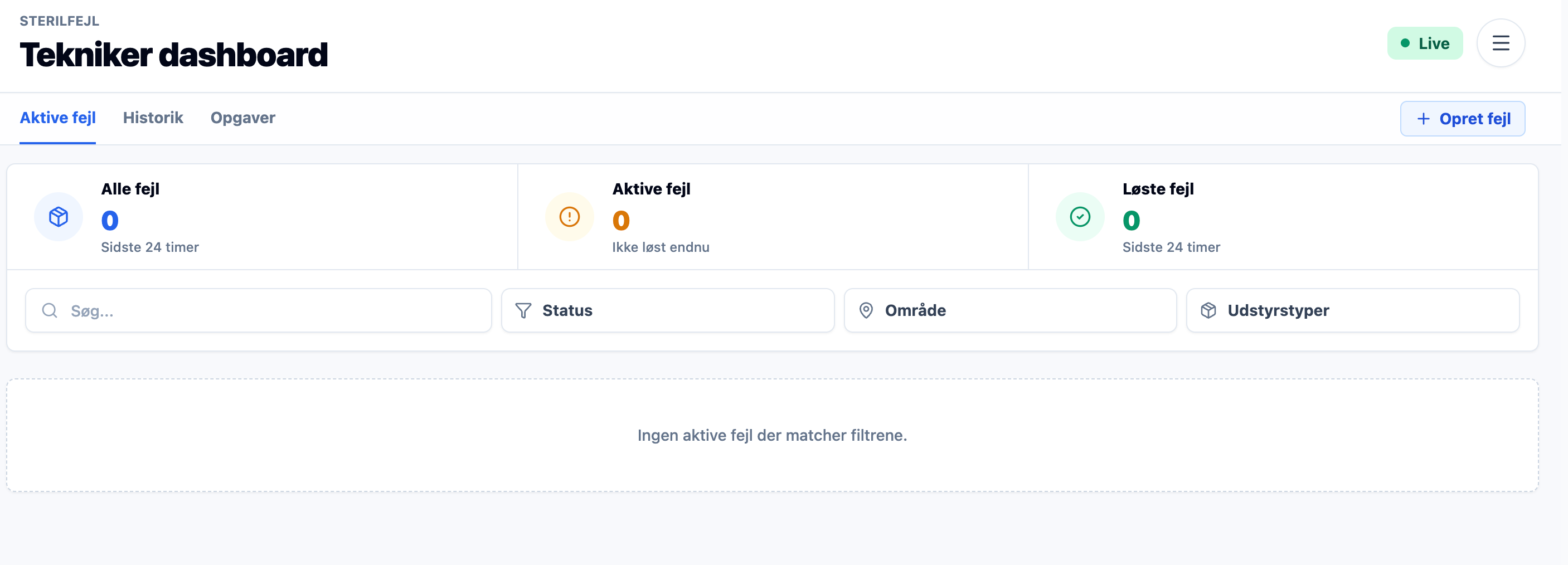
When a machine in the sterile supply department has a fault, it needs to be reported and someone needs to pick it up. SterilFejl handles that in one place: staff report the fault from their phones, technicians are notified immediately, and everyone can follow the case until it’s resolved. Afterwards, the statistics show which machines fail most often.
Commissioned by the director and built for the reprocessing staff and the technicians who repair the equipment.
Why I built it
The director wanted a data-driven system instead of a process that relied on phone calls and memory. He wanted to see exactly which machines broke, why they broke, how often it happened, and how long each case took to resolve. SterilFejl turns that into structured reporting: one place to file a report, one place to check status, and a clear record of what happened.
How it works
A report takes about 10 seconds to file through a mobile-first, PIN-protected form. Staff choose area, category, machine, and fault type, with an optional comment. Reports appear on the technician dashboard immediately, with realtime updates and push notifications so new faults do not sit unseen. Critical fault types are highlighted so urgent issues stand out faster.
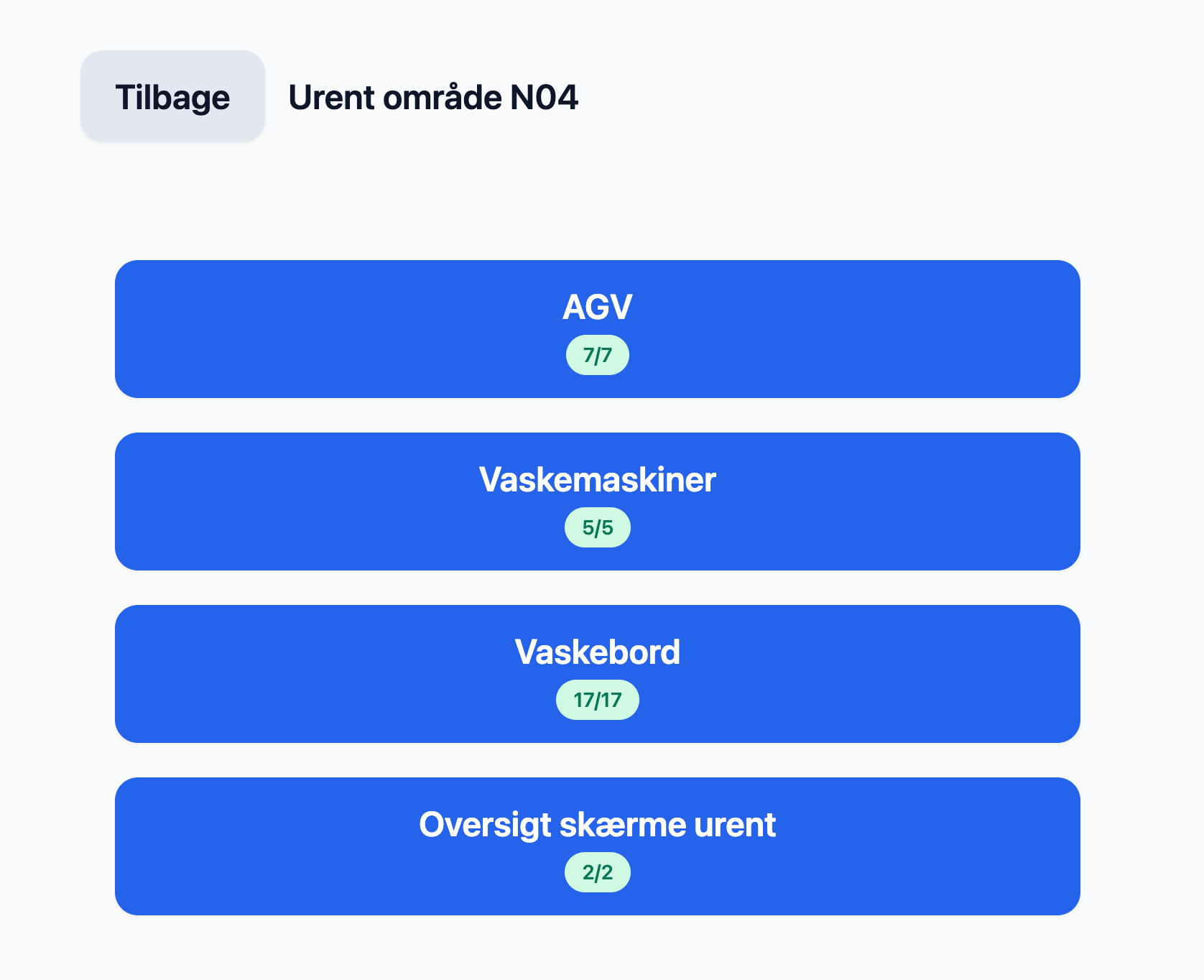
The reporting interface is deliberately simple: staff can register a fault in about 10 seconds without leaving the workflow.
Status changes (open -> in progress -> resolved) update in real time, so anyone can check where a report stands without chasing anyone down.
Technicians can filter and sort active faults, add technician comments, inspect recent equipment history, export resolved history to CSV, and use statistics to see patterns across machines, fault types, categories, and resolution time.
Built to run in production
Beyond the reporting flow, SterilFejl includes the operational layer a hospital tool needs: an admin panel for areas, categories, machines, fault types, users, settings, statistics, and recurring maintenance tasks. It is installable as a PWA, supports offline queueing for reports, and has a completed security review covering Supabase row-level security, privileged function exposure, auth hardening, rate limits, and production diagnostics. Built with Next.js, Supabase, and Vercel.