SterilFejl
Maskinfejl bliver nu meldt fra telefonen og fulgt op. Før blev de ringet ind og husket i hovedet.
- Problem
- Fejl på maskinerne blev meldt over telefonen og husket i hovedet. Ingen kunne se, hvad der gik i stykker igen og igen.
- Bygget til
- Medarbejderne i genbehandlingen, der melder fejlene, teknikerne, der retter dem, og ledelsen, der følger med.
- Min rolle
- Jeg designede og byggede systemet. Direktøren bestilte det.
- Status
- Klar til drift: kan installeres på telefonen, har adminpanel, virker offline og er sikkerhedsgennemgået.
nextjs · healthcare · supabase
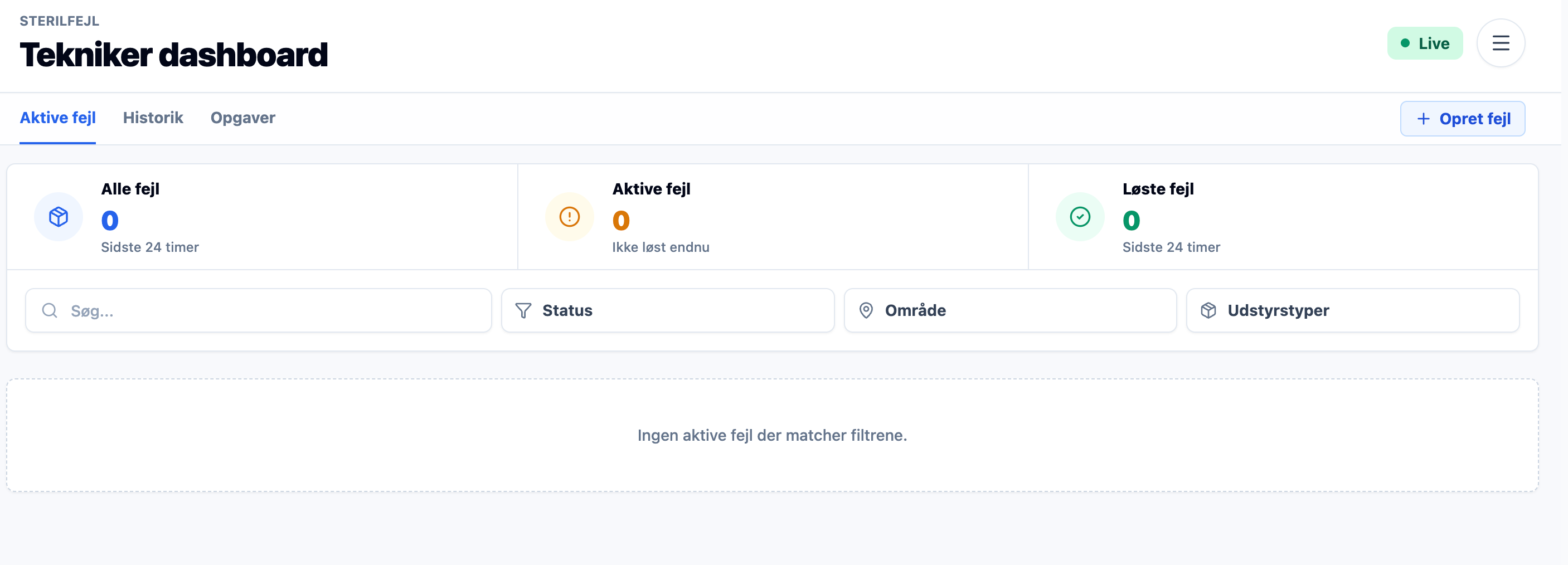
Når der er fejl på en maskine på sterilcentralen, skal den meldes, og nogen skal tage sig af den. SterilFejl samler det ét sted: medarbejderne melder fejlen fra telefonen, teknikerne får besked med det samme, og alle kan følge sagen, indtil den er løst. Bagefter viser statistikken, hvilke maskiner der fejler mest.
Direktøren bestilte systemet, og det er bygget til medarbejderne i genbehandlingen og teknikerne, der reparerer maskinerne.
Hvorfor jeg byggede det
Direktøren ville have tal at styre efter i stedet for telefonopkald og hukommelse. Han ville kunne se, hvilke maskiner der gik i stykker, hvorfor, hvor tit, og hvor lang tid det tog at få dem ordnet. SterilFejl samler det hele ét sted: her melder man fejlen, her ser man status, og her kan man bagefter se, hvad der skete.
Sådan virker det
Det tager omkring 10 sekunder at melde en fejl. Man logger ind med en PIN-kode på telefonen, vælger område, kategori, maskine og type fejl og kan skrive en kommentar. Meldingen dukker straks op hos teknikerne, og de får en notifikation, så ingen fejl ligger og venter. Alvorlige fejl bliver fremhævet.
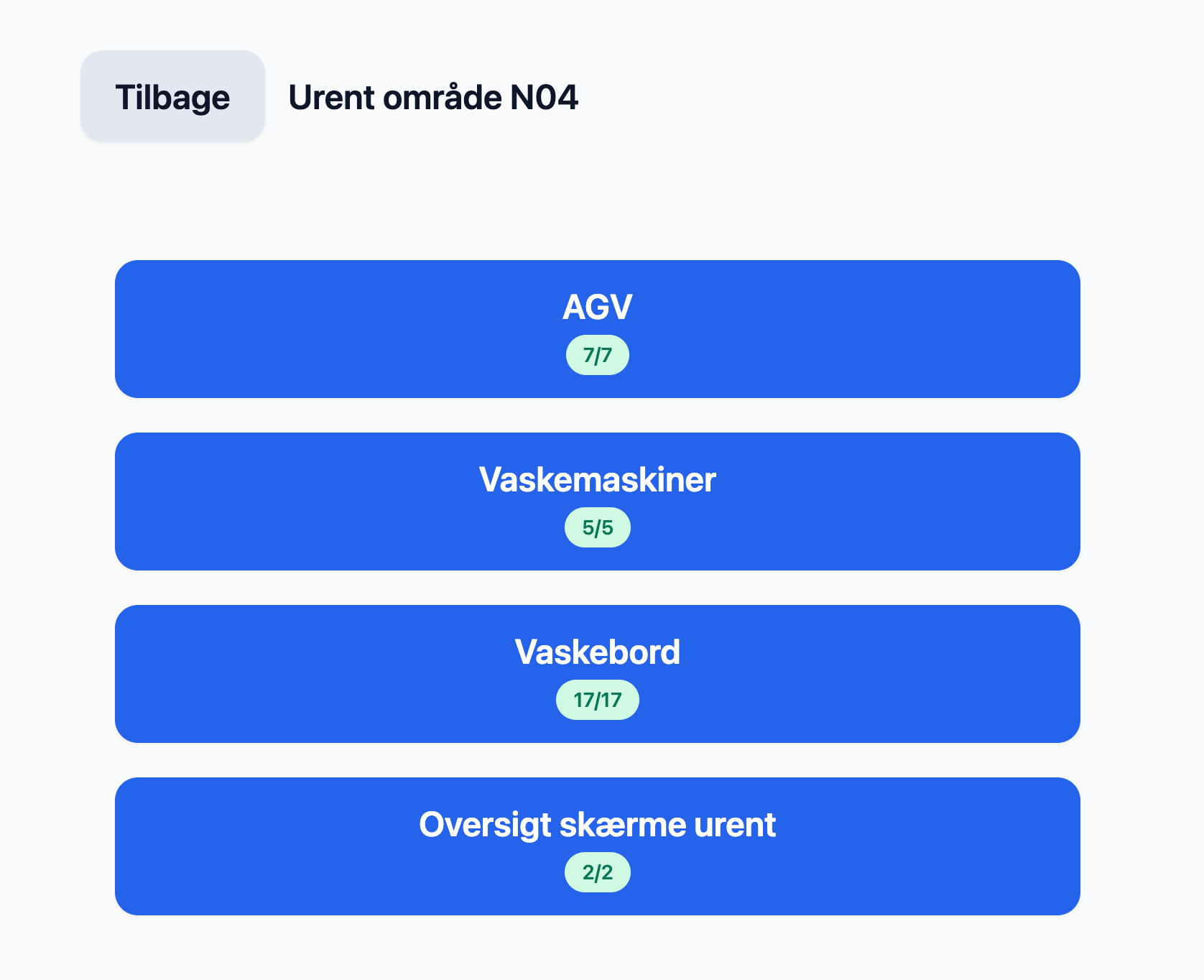
Skærmen er bevidst enkel, så en fejl kan meldes på omkring 10 sekunder midt i arbejdet.
Når en sag skifter status (åben → i gang → løst), kan alle se det med det samme. Man behøver ikke gå rundt og spørge.
Teknikerne kan filtrere og sortere fejlene, skrive kommentarer, se hvad der tidligere er sket med en maskine, eksportere løste sager til CSV og se statistik over, hvilke maskiner og fejltyper der fylder mest, og hvor lang tid sagerne tager.
Klar til drift
Et værktøj til et hospital skal mere end bare at kunne tage imod fejlmeldinger. SterilFejl har et adminpanel, hvor man styrer områder, kategorier, maskiner, fejltyper, brugere, statistik og faste vedligeholdelsesopgaver. Det kan installeres på telefonen som en app, gemmer meldinger, hvis nettet er væk, og har været igennem en sikkerhedsgennemgang af blandt andet adgangsregler i databasen, login og begrænsning af antal forespørgsler. Bygget med Next.js, Supabase og Vercel.